

Pharmaceutical buyers and regulatory affairs professionals who source Piroxicam API from India routinely receive a Certificate of Analysis and a GMP certificate. Far fewer receive a clear explanation of the synthesis route, the critical process parameters that determine both the chemical purity and the polymorphic form of the final API, and the ICH Q3A impurity qualification framework that governs what the COA's related substances section is actually measuring. This transparency gap between what is supplied and what is understood creates blind spots in supplier evaluation and in regulatory dossier preparation that become costly when a reviewer query arrives or a batch quality event requires joint root cause investigation.
This guide provides pharmaceutical buyers, regulatory affairs teams, and formulation scientists with a clear, technically accurate account of how Piroxicam API is manufactured in a cGMP Indian facility, covering the synthesis route from starting material to final API, the ICH Q7 process controls that apply at each step, the ICH Q3A impurity profile with qualification rationale, and the ICH M7 genotoxic impurity assessment specific to the Piroxicam synthesis route.
The Piroxicam API Synthesis Route: From Saccharin to Final API
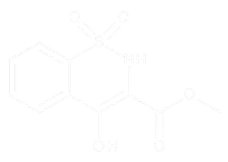
Piroxicam synthesis starts from saccharin (1,2-benzisothiazolin-3-one 1,1-dioxide, CAS 81-07-2) as the defined API starting material under ICH Q7. Saccharin provides the benzothiazine ring system that forms the core scaffold of the oxicam molecule. The synthesis proceeds through five principal steps, each with defined critical process parameters and in-process control checkpoints in a cGMP manufacturing operation.
Step 1: Ring Opening of Saccharin to Form Benzothiazine Intermediate
Saccharin undergoes base-mediated ring opening under aqueous alkaline conditions (typically sodium hydroxide in water or methanol-water systems) to form the open-chain benzothiazine carboxylate salt. The reaction requires controlled temperature (typically 20 to 40 degrees Celsius) and pH (above 10) to achieve complete ring opening without side reactions. The critical process parameters at this step are the base concentration, reaction temperature, and reaction time. The in-process control checkpoint is pH and thin-layer chromatography (TLC) or HPLC assay of the reaction mixture to confirm complete conversion of saccharin before proceeding to the next step.
Step 2: N-Methylation to Introduce the 2-Methyl Group
The benzothiazine carboxylate intermediate undergoes N-methylation using a methylating agent such as dimethyl sulphate or methyl iodide under controlled conditions to introduce the N-methyl group at position 2 of the benzothiazine ring. Dimethyl sulphate is a potent alkylating agent and carries a Class 1 genotoxic structural alert under ICH M7. This step requires stringent process controls to ensure complete consumption of the methylating agent before the batch proceeds to the next step, with in-process testing confirming dimethyl sulphate residual below the ICH M7 permitted daily exposure limit. The ICH M7 assessment for the Piroxicam synthesis must specifically address the fate and purge of dimethyl sulphate through the downstream synthesis and purification steps.
The ICH M7 genotoxic impurity assessment obligation for dimethyl sulphate in the Piroxicam N-methylation step follows the same framework as the genotoxic impurity assessment for the glycidyl ether epoxide intermediate in the Metoprolol synthesis route. Buyers who want a detailed walkthrough of how ICH M7 purge factor calculations and analytical control requirements apply to genotoxic impurities in pharmaceutical API synthesis will find the worked framework in the guide to Metoprolol Succinate API manufacturing and ICH Q3A impurity control directly applicable to their Piroxicam dossier preparation.
Step 3: Condensation With Ethyl Oxalate to Form 3-Carboxylate Ester
The N-methylated benzothiazine intermediate is condensed with diethyl oxalate (or ethyl oxalyl chloride in some process variants) under basic conditions to form the 3-carbethoxy (ester) intermediate. This step introduces the carboxylate group at position 3 of the benzothiazine ring, which will ultimately form the amide bond in the final Piroxicam molecule. The critical process parameters at this step are the molar ratio of the benzothiazine intermediate to diethyl oxalate, the reaction temperature, and the pH. Over-reaction or incomplete reaction at this step produces the di-substituted by-product or unconverted starting material, both of which become impurities in the final API if not removed during purification.
Step 4: Condensation With 2-Aminopyridine to Form the Piroxicam Amide
The 3-carboxylate ester intermediate is condensed with 2-aminopyridine to form the amide bond that connects the pyridyl group to the benzothiazine-3-carboxylate, producing Piroxicam base. The reaction is conducted in a polar aprotic solvent at elevated temperature. 2-Aminopyridine (the amine component) is an identifiable process-related impurity if not fully consumed in the condensation reaction and removed during workup. The in-process control checkpoint is HPLC assay of the crude Piroxicam amide product for 2-aminopyridine residual and related by-products before proceeding to purification.
Step 5: Recrystallisation and Polymorph-Controlled Drying
The crude Piroxicam is purified by recrystallisation from a validated solvent system. This is the most process-critical step in the synthesis from both a purity and a polymorph perspective. The solvent system composition (typically ethanol, acetone, DMF, or mixtures thereof), crystallisation temperature, cooling rate, seeding strategy (if applied), and anti-solvent addition profile collectively determine which polymorphic form crystallises from solution and the particle size distribution of the crystalline product. Validated parameters at this step ensure consistent production of the thermodynamically stable Form I polymorph. The drying temperature and time are controlled to remove residual crystallisation solvent within ICH Q3C limits without inducing thermal decomposition or polymorph conversion.
ICH Q7 cGMP Requirements Applied to Piroxicam API Manufacturing
ICH Q7, the GMP guide for API manufacturing, defines the quality system framework within which every step of the Piroxicam synthesis described above must operate for the API to be used in regulated-market finished-dose products. The ICH Q7 requirements most directly relevant to Piroxicam manufacturing cover the API starting material definition, the validation of the synthesis process, and the critical quality attribute monitoring programme.
The ICH Q7 starting material for Piroxicam API is typically designated as saccharin or the N-methylated saccharin intermediate (N-methylsaccharin), depending on the manufacturer's regulatory justification and the inspection authority's acceptance of the starting material designation. The starting material designation determines from which step GMP controls must apply: all synthetic steps from the introduction of the starting material onward must be conducted in GMP-qualified areas, with qualified equipment, documented process parameters, and batch manufacturing records. A manufacturer who designates saccharin as the starting material must apply GMP controls from Step 1 above. A manufacturer who designates N-methylsaccharin as the starting material (after Steps 1 and 2) applies GMP controls only from Step 3 onward, reducing the GMP-controlled scope but potentially increasing the regulatory authority's scrutiny of the starting material justification.
Buyers preparing Piroxicam API drug substance sections for ANDA or EU MA dossiers should confirm their supplier's ICH Q7 starting material designation and request the regulatory authority's acceptance of that designation before including the supplier as a drug substance source. Full specification data and regulatory documentation availability for Piroxicam API from Kodel Life are outlined on the Piroxicam API Manufacturer.
ICH Q3A Impurity Qualification for Piroxicam API
Piroxicam API synthesis produces a characteristic impurity profile arising from the five-step synthesis route. Under ICH Q3A, the manufacturer must report, identify, and qualify impurities above the defined thresholds for a drug substance administered to humans at a dose typically used for Piroxicam (10 to 20 mg per day, which at this dose range places the identification threshold at 0.10 percent and the qualification threshold at 0.15 percent for impurities not exceeding 1.0 mg per day intake).
| Impurity Name | Origin in Synthesis | ICH Q3A Status and Control |
| Saccharin | Starting material | Identified; purge demonstrated through Steps 1-5; analytical control <0.05% |
| N-Methylsaccharin | N-methylation step by-product | Identified; controlled by Step 2 IPC; qualified at specification limit |
| Dimethyl sulphate | Methylating agent (Step 2) | ICH M7 genotoxic alert; controlled to below TTC by validated purge and/or analytical control |
| 2-Aminopyridine | Amine component (Step 4) | Identified; controlled by Step 4 IPC and recrystallisation purge; NMT 0.10% |
| Di-substituted by-product | Step 3 over-reaction | Identified; controlled by Step 3 molar ratio CPP; NMT 0.10% (BP) |
| Piroxicam degradant (photo) | Light-induced degradation | Degradation impurity; controlled by light-protected drying and packaging |
| Residual solvents (Step 5) | Crystallisation solvents (ethanol, acetone, DMF) | Controlled per ICH Q3C; Class 2/3 solvents; NMT ICH Q3C PDEs |
ICH M7 Genotoxic Impurity Assessment for Piroxicam API
ICH M7 requires a risk assessment for any impurity with a DNA reactive (mutagenic) structural alert present or potentially present in a drug substance. For Piroxicam API, two impurities in the synthesis route carry ICH M7 structural alerts that require assessment: dimethyl sulphate, the methylating agent used in Step 2, and saccharin, the synthesis starting material.
Dimethyl Sulphate: Class 1 ICH M7 Alert
Dimethyl sulphate is a potent alkylating agent with a Class 1 genotoxic structural alert under ICH M7 classification - a known mutagenic carcinogen. Its presence in the N-methylation step of the Piroxicam synthesis requires either an analytical control demonstrating that dimethyl sulphate is purged to below the ICH M7 threshold of toxicological concern (1.5 micrograms per day for chronically administered drugs) or a validated purge factor calculation demonstrating adequate depletion across the downstream synthesis steps. The ICH M7 assessment for dimethyl sulphate in the Piroxicam synthesis is one of the most scrutinised genotoxic impurity assessments in regulatory reviews of Piroxicam ANDA and EU MA dossiers. An assessment that relies solely on purge factor calculation without analytical verification data at a representative batch scale is likely to receive a regulatory reviewer query in both FDA and EMA dossier assessments.
Saccharin: ICH M7 Structural Alert Assessment
Saccharin was previously listed by IARC as a possible human carcinogen (Group 2B), though this classification was revised to Group 3 (not classifiable as to carcinogenicity in humans) following evidence that the bladder carcinogenicity observed in rats is species-specific and not relevant to human risk at therapeutic doses. Under ICH M7, the manufacturer must assess saccharin for DNA reactivity using in silico structural alert evaluation tools (QSAR models such as DEREK or Sarah Nexus). The current consensus from structural alert models is that saccharin does not carry a mutagenic structural alert under ICH M7 framework. However, the manufacturer's ICH M7 dossier must document this assessment explicitly, confirming the in silico tools used, the prediction results, and the basis for classifying saccharin as a Class 5 impurity (no genotoxic concern) or for controlling it as a process impurity below the ICH Q3A reporting threshold.
Process Validation for Piroxicam API: What Three Batches Must Demonstrate
ICH Q7 and the FDA's 2011 Process Validation Guidance require pharmaceutical API manufacturers to demonstrate through process performance qualification (PPQ) batches that the manufacturing process consistently delivers API meeting its predetermined quality specifications. For Piroxicam API, the PPQ programme must demonstrate two things that are not required for APIs where polymorph is not a critical quality attribute: first, that the recrystallisation step consistently produces Form I polymorph across all three PPQ batches; and second, that the particle size distribution (D10, D50, D90) falls within the specified range across all three batches.
The continued process verification (CPV) programme for Piroxicam API must include XRPD polymorph monitoring and particle size distribution measurement as part of the ongoing commercial batch data set, not only as release tests for individual batches. Statistical process control charts for D90 and Form I peak intensity across consecutive commercial batches provide the evidence that the crystallisation process remains in a state of control over time, not just at the point of process validation.
The process validation framework and continued process verification requirements that apply to Piroxicam API manufacturing are consistent across pharmaceutical API manufacturing under ICH Q7, regardless of the specific molecule. Buyers who are familiar with the cGMP process validation context from evaluating furosemide API manufacturers will find the same ICH Q7 Section 12 requirements apply. The synthesis route, in-process controls, and process validation evidence for furosemide API manufacturing are covered in the furosemide API manufacturing process guide, providing a useful reference framework for buyers comparing validation evidence across multiple API molecules.
Residual Solvent Control in Piroxicam API Recrystallisation
The recrystallisation solvent used in Step 5 of the Piroxicam synthesis must be controlled within ICH Q3C permitted daily exposure (PDE) limits in the final API. The most commonly used recrystallisation solvents for Piroxicam include ethanol (ICH Q3C Class 3; PDE 5,000 ppm), acetone (ICH Q3C Class 3; PDE 5,000 ppm), and DMF (dimethylformamide, ICH Q3C Class 2; PDE 8.8 mg/day). DMF is the most solvent-critical choice: as a Class 2 solvent with a relatively low PDE and known reproductive toxicity at elevated exposures, DMF residuals in the final Piroxicam API must be tested by a validated headspace GC or GC-MS method and confirmed within the ICH Q3C PDE limit for each commercial batch.
Buyers sourcing Piroxicam API from manufacturers who use DMF in the recrystallisation step should confirm that the COA includes a DMF residual solvent result by headspace GC (with the limit stated as 8.8 mg/day or the equivalent ppm limit based on the maximum daily dose of Piroxicam), and that the analytical method is validated to the ICH Q2(R1) system suitability requirements for the DMF detection level. A COA that omits residual solvent results, or that confirms 'residual solvents: complies' without a numeric DMF result, is not providing adequate residual solvent documentation for a Piroxicam API using DMF in the crystallisation step.
Kodel Life's Piroxicam API manufacturing process includes validated in-process controls at each of the five synthesis steps, XRPD polymorph monitoring as a batch release specification and as part of the stability programme, particle size distribution testing by laser diffraction, ICH Q3C residual solvent testing by headspace GC for all Class 2 solvents used in the recrystallisation step, and a fully characterised ICH Q3A impurity profile with ICH M7 genotoxic impurity assessment for dimethyl sulphate and saccharin. Technical dossier requests are processed within two business days. Contact info@kodellife.com or call +91 75023 33335.
Process Transparency Builds Better Supply Relationships
An API supplier that can explain its synthesis route, identify process-related impurities by name, and provide validation evidence demonstrating consistent polymorph control is not simply a vendor. They are a scientific partner in the buyer's finished-dose product development and regulatory filing programme. The level of process transparency demonstrated in a pre-qualification technical dialogue is the best predictor of how the supplier will respond when a deviation occurs in commercial supply - with openness, data, and collaborative problem-solving.
Kodel Life provides full process transparency for Piroxicam API, including synthesis route overview, ICH Q7 starting material designation, ICH Q3A impurity profile with named impurities, ICH M7 assessment documentation for dimethyl sulphate and saccharin, process validation data summaries, and ICH Q1A stability data. Contact Kodel Life at info@kodellife.com or call +91 75023 33335 to request a technical dossier for Piroxicam API.
Request Piroxicam API Technical Dossier:
Contact Kodel Life to receive the Piroxicam API technical dossier including synthesis route overview, ICH Q3A impurity profile, ICH M7 assessment, process validation data summary, and ICH Q1A stability data. Email info@kodellife.com or call +91 75023 33335.